
pínglùn评论Essay
Gujian 3 Wasn’t a Bad RPG. It Was Judged in the Wrong Language.
Why one of China’s most ambitious games struggled to travel, and what that reveals about cultural blind spots in game launches.
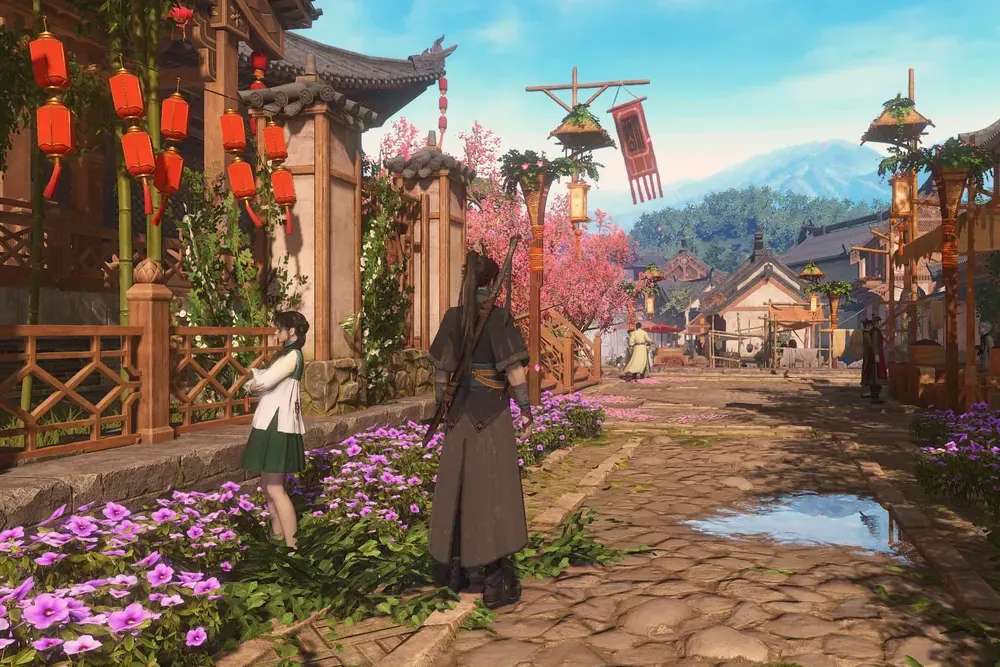
In November 2018, Shanghai studio Aurogon released Gujian 3, the third entry in one of China’s most respected RPG series. The production values were high. The cast was fully voiced. Combat was motion-captured. The story drew from xianxia 仙侠 literature, one of the most influential genres in modern Chinese popular culture.
By July 2020, Gujian 3 had sold more than 1.3 million copies and still held a Very Positive rating on Steam. Almost none of that success happened in English. Of the reviews on the store page, around 37,000 were written in Simplified Chinese. Around 1,700 were in English. Keep those numbers in mind. They tell the story in miniature: the game was loved, and almost all of that love happened in one language.
And yet, if you ask a dozen Western RPG players whether they have played it, most will draw a blank.
This is not a story about a bad game. It is not even a story about commercial failure. It is a story about a successful game whose international reach remained limited.
The usual explanations — poor localization, niche appeal, lack of polish — are not entirely wrong. But they are incomplete. Gujian 3 shows something more structural. Even when quality is high and reception is positive, cultural framing determines how far a game can travel. In this case the framing was misaligned from the start.
How the West Encountered Gujian 3
When English-speaking players found Gujian 3 on Steam in late 2019, a year after its release, they found an Action RPG. The store page sold them on the combat. It told them what the game did.
It did not tell them what they were looking at.
Metacritic has no critic reviews for the game. Not a bad verdict. Not a mixed one. Nothing. The one substantial English-language feature appeared in PC Gamer, written by someone who had grown up reading xianxia. The genre was named in the second paragraph, the word explained, and the game praised for how faithfully it carried that tradition. It did exactly the work that needed to be done.
It was also, more or less, the only place doing it.
That matters. We tend to think of cultural misunderstanding as a problem of interpretation: the wrong lens, the wrong frame, the wrong expectations. Sometimes the problem is simpler. Sometimes nobody explains anything.
On Reddit, particularly in threads on r/JRPG and r/patientgamers, early reactions followed a similar pattern. Many players felt there were too many cutscenes, while several described the first half as slow and said it often lacked a clear sense of progress. On Steam, English-language reviews praised the visuals and worldbuilding, but raised more concerns about the pacing and overall structure.
These were not unreasonable reactions. They were reactions formed inside a particular evaluative framework. The issue is that the framework itself was not neutral.
The Question That Shaped the Judgment
Gujian 3 was largely evaluated through a single question: is this a good RPG by Western standards?
That question carries assumptions. It assumes player agency is central. It assumes narrative exists to support action. It assumes pacing should build toward empowerment. These are conventions. They are not universal rules.
When applied to Gujian 3, those conventions acted like the wrong prescription glasses. The image looked unclear not because it lacked structure, but because it was viewed through the wrong lens.
What Gujian 3 Is Actually Optimized For
It’s clear from the game itself what kind of experience it is aiming for. The art direction focuses on signs of wear and exhaustion: clothes look worn, faces show fatigue, and environments feel grounded and lived-in. It isn’t trying to match the pace of Western action games or follow the usual structure of a Japanese RPG. The longer cutscenes are deliberate, and the quieter sections serve a purpose. Rather than constantly raising the stakes, the game builds its impact gradually, even when that means sacrificing some momentum.
Narrative as Moral Observation
In many Western RPGs your role is to assert power. In Gujian 3 your role is to endure and interpret.
The main character, Beiluo 北洛, does not conquer a world that bends to his will. He moves through events shaped by generational debts, curses and cosmic cycles. His choices matter, but not in the form of branching moral binaries. Meaning comes from what he carries forward, not what he dominates.
Within xianxia tradition, strength is not only force. It is restraint. It is loyalty. It is an acceptance of consequence.
The dramatic question is not “will you win?” It is “what will remain after you act?”
Pacing as Emotional Space
The developers were clear that the story was layered and meant to reward multiple passes. That structure demands space. Scenes linger because later scenes echo them. Emotional beats are allowed to breathe because later events recontextualize them.
When players describe the game as slow, they are measuring it against a model that values constant forward motion. Gujian 3 prioritizes yijing 意境, a sense of atmosphere and emotional space.
Silence is intentional. Progress is measured less in new abilities and more in internal change. This approach is rooted in long traditions of Chinese storytelling where mood and resonance matter more than acceleration.
Combat as Expression
Combat in Gujian 3 is fluid and visually impressive. But it is not where the story resolves. Battles express emotion. They do not settle it. Meaning lives in what characters carry afterward.
For players expecting combat to be the core driver, this can feel disorienting. That disorientation is not necessarily a design flaw. It may be an expectation mismatch.
Why Localization Wasn’t Enough
When English subtitles were added in November 2019, sales increased. That suggests demand existed. But improved translation did not remove pacing complaints or structural confusion.
The language was translated. The lens was not.
Translation clarifies words. It does not automatically clarify frameworks. When Western players say the game is slow, they often mean pacing failure. When they say the protagonist feels passive, they often mean weak writing. Within xianxia logic, restraint and acceptance are strengths, not weaknesses.
The reactions followed familiarity. The PC Gamer writer who grew up with xianxia praised qualities that other players found slow or tedious. Same game, different reader, opposite conclusion. That does not prove much by itself. But it points towards an uncomfortable possibility: Gujian 3 did not simply need a better translation. It needed more people who already knew how to read it. And there was no mechanism for finding those people, let alone making them.
A Necessary Caveat
Not every culturally rooted narrative will scale equally across markets. Audience preference is real. Cultural distance matters.
The question is not whether every xianxia RPG should dominate globally. The more practical question is this: was the game’s international ceiling determined by audience preference alone, or was it lowered by misaligned expectations at launch? Those are different problems, and they require different solutions.
The Real Failure: Framing
Gujian 3 went out into the wider world packaged as a generic Action RPG. Its own store page led with the combat system and explained that this installment expanded the world of Gujian based on previous works, a sentence that works perfectly when you already know the series, and barely communicates anything when you do not.
That is where the problem becomes difficult to ignore. Somewhere in the game’s presentation, a decision had been made that the people who needed the most context already had it.
The game’s own material never explains what xianxia does to its pacing, its characters, or even the emotional shape of its endings.
The design did not fail. The framing did.
That distinction matters. If the design were weak, the solution would be better design. If the framing was misaligned, the solution is strategic.
Framing errors compound. Early reviews influence algorithms. Algorithms shape visibility. Visibility shapes perception. Once a narrative settles, it is difficult to reverse. Cultural misunderstanding is not simply an artistic issue. It is a commercial risk.
The Pattern Beyond Gujian 3
A similar pattern can be seen in other Chinese wuxia and xianxia games, such as Sword and Fairy 7, The Wind Road, and Faith of Danschant. Each found an audience in China but had a much smaller international reach. In these cases, English and other language support appeared before there was much effort to explain the cultural context or the kind of story players were stepping into.
These examples do not demonstrate uniform failure. They illustrate a recurring tension. Translation arrives, but genre onboarding does not.
The Business Lesson
International launch strategy often focuses on localization and marketing spend. Neither replaces validation of cultural readability.
When a game enters a new market, the risk is not only that players will dislike it. The risk is that they will misunderstand it. Early misunderstanding shapes reviews. Reviews shape algorithms. Algorithms shape revenue.
The relevant question for studios and publishers is simple. What expectations will this audience bring, and how will those expectations interact with the design? If those expectations clash with core design principles, the solution is not more advertising. It is reframing before launch. Validation in this sense is not academic analysis. It is risk management.
How Many Great Games Are Waiting?
Gujian 3 did not need faster pacing. It did not need a more aggressive protagonist. It did not need fewer cutscenes.
It needed to be understood before it was judged.
More than a million players experienced it within a shared cultural vocabulary. A smaller Western audience encountered it with mixed reactions — some delighted, some confused, many unsure how to read it.
How many other games are waiting on the same thing?
道
Every word above was written by a person. AI was used to find sources and check facts, and a person checked the AI. It wrote none of this.
Write to us. info@daoplay.net · Any language · We answer